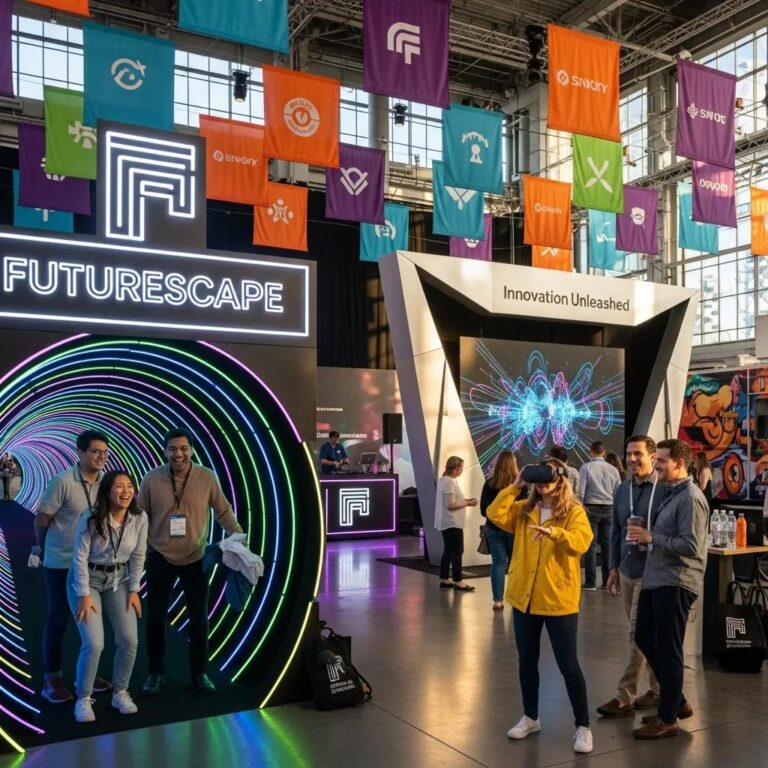
A product launch is not one event. It’s a sequence of overlapping events compressed into a 4 to 6 hour window, and each one has a different audience, a different success metric, and a different production requirement. Treat them as a single party and the press leaves before the reveal, the executive interviews collide with the demo stations, and the hero photography happens in the wrong light.
Here is the sequence we build against on a typical evening launch:
Hour -2 to 0 — press preview and embargoed walk-through
Top-tier press and analysts arrive 90 to 120 minutes before the public reveal, under embargo. They get a quiet walk of the product, time with the founder or category lead, and clean photography access without the crowd. This is where the long-form coverage is earned — Bloomberg, WSJ, Wired, the trade publications. The room needs to be fully built, fully lit, and fully staffed by hour -2, not still being touched up.
Hour 0 to 1 — guest arrival, partner mingle, and the holding room
General guests, partners, and creators arrive into a holding experience — drinks, ambient music, branded scenic, a content moment or two, but not the product yet. The product reveal lives behind a soft barrier, drape, or sealed entry. This is the anticipation window, and it is the single most under-produced part of most launches. Done well, it builds social posts before the reveal even happens.
Hour 1 to 1:30 — the hero reveal and executive remarks
Lights drop, audio cue, founder takes the stage or steps to a hero spot, and the product is revealed. This is the moment that needs to hit camera perfectly — single key light on the founder, product hero light on the product, two-camera coverage minimum, and a still photographer on the apron with a clean line of sight. Remarks stay short. The reveal moment is the asset, not the speech.
Hour 1:30 to 4 — demo, photography, executive interviews, partner conversations
The room opens. Demo stations activate, the executive interview corner runs on a schedule with PR managing time, partners get their conversations, creators get their content. This is the longest stretch of the night and it needs the most floor management — a stage manager with a comms headset and a clear escalation path is non-negotiable for anything above a 200-person launch.


 203-208-8909