Event Fabrication

Event Fabrication Workflow: From Concept to Build to Breakdown

May 17, 2026 By Event Fab Team 11 min read

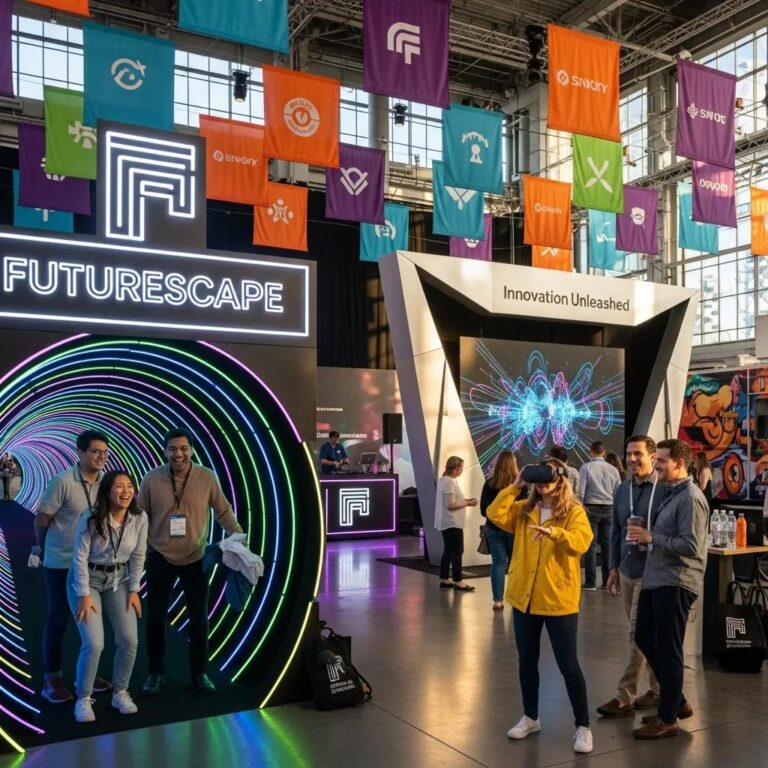
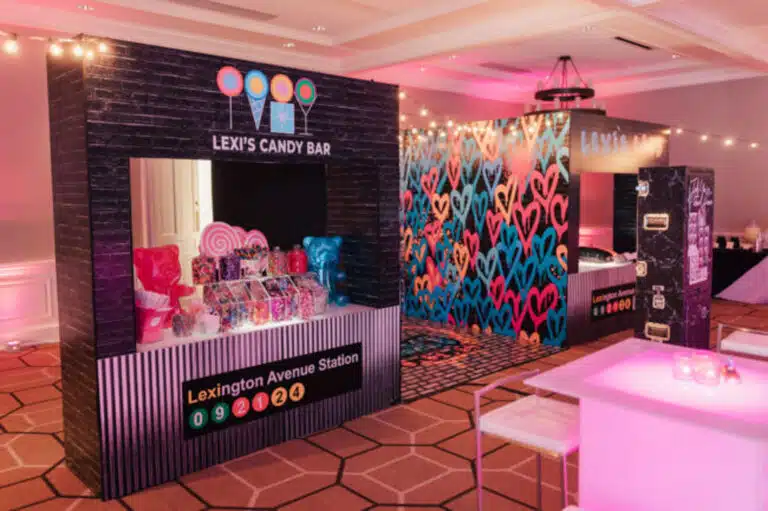
Most brand teams meet event fabrication through a single image — a custom bar, a monolithic entryway, a sculpted product pedestal — and assume the magic happens in the two weeks before the doors open. The reality is that the build everyone photographs on show day is the visible 20 percent of a process that started six to twelve weeks earlier in a CAD file, a materials list, and a venue site survey.

Below is the actual event fabrication process our shop runs in New York, Connecticut, Massachusetts, and Rhode Island — concept to build to breakdown — including the lead times that drive every decision, the failure modes that quietly torch a launch, and the production checkpoints that separate a finished build from a finished-looking build.

Key Takeaways

  • A custom event build is a 6 to 12 week process — not a 2 week one — and the brand teams who treat it like a sprint are the ones whose timelines collapse in week three.
  • Engineering drawings, structural review, and a venue site survey have to happen before a single sheet of plywood is cut; skip them and you'll discover the freight elevator is two inches too narrow on load-in night.
  • Materials lead times — especially for custom-printed graphics, acrylic, LED, and specialty laminates — drive your entire calendar; lock specs before you lock dates.
  • Load-in windows in NYC, Boston, and Hartford venues are short and inflexible; the build sequence on site is engineered backwards from those windows, not the other way around.
  • Strike and storage are part of the fabrication cost, not an afterthought — plan the breakdown the same week you plan the build, or watch your overtime line item explode at 2 a.m.

Phase 1 — Concept Intake and Creative Brief (Weeks 1-2)

The event fabrication process starts with a written brief, not a sketch. Before a designer opens a CAD file, our team works through a kickoff document that covers six things — and every one of them is a load-bearing decision for the rest of the build.

  • Brand intent. What is the audience supposed to feel? Premium and quiet, or loud and Instagram-forward? This drives material palette before it drives anything else.
  • Functional requirements. Is the build a backdrop, a working bar, a demo zone, a photo moment, or all four? Multi-use builds need to be engineered differently than single-purpose ones.
  • Venue constraints. Ceiling height, freight elevator dimensions, load-in window, floor protection rules, rigging policy, fire code.
  • Budget band. A custom build can land anywhere from $8,000 to $250,000 — narrowing the band early kills the back-and-forth in design.
  • Reusability. Is this a one-time build, a roadshow that tours four cities, or a piece that will live in your office post-event? Touring builds are engineered for repeated load-in cycles.
  • Brand assets. Vector logos, brand fonts, Pantone codes, approved imagery. Getting these on day one prevents two-week delays at print-production.

Most timeline failures we see in the industry start here, not on build day. A brief that’s still being negotiated in week four is a brief that will not finish on time. If the foundational concept of event fabrication is new to your team, our complete guide to event fabrication walks through the vocabulary before you sit down for a kickoff.

Phase 2 — Design, Engineering, and Renderings (Weeks 2-4)

Once the brief is locked, the build moves into design and engineering — and this is where event fabrication separates from event decor. A custom bar at a 200-person activation isn’t a piece of furniture; it’s a structure that has to hold its own weight, the weight of glassware and ice, and the lateral force of people leaning on it for four hours. It needs drawings.

What gets produced in this phase

  • 3D renderings for client approval — usually 2 to 3 rounds of revisions, each round taking 3 to 5 business days.
  • Shop drawings with dimensions, materials callouts, fastener schedules, and finish notes — these are what the build team works from, not the renderings.
  • Structural review for anything load-bearing, suspended from the ceiling, or over 8 feet tall.
  • Modular cut-sheets if the build needs to break down into panels that fit a freight elevator or roll cart.
  • Graphic files built to bleed and resolution requirements for whatever printing method is being used — direct-print acrylic, dye-sub fabric, UV-cured rigid, large-format vinyl.

The most expensive change order in event fabrication is the one that lands after the materials have been ordered. A 10 percent design change after purchasing can easily mean a 30 percent cost increase, because half the materials are no longer usable. The discipline at this phase is to lock the design before procurement — even if it means pushing creative deadlines harder than the client wants.

Phase 3 — Materials, Procurement, and Lead Times (Weeks 3-6)

This is the phase brand teams underestimate the most. Procurement runs in parallel with design finalization, and the lead times are non-negotiable.

  • Plywood, MDF, and dimensional lumber: 1 to 3 days in stock, longer for specialty plywood (baltic birch, marine grade).
  • Custom-printed graphics: 5 to 10 business days for production, plus shipping. Rush is possible but expensive.
  • Acrylic and rigid plastics: 5 to 14 days for custom colors, clear/white in stock.
  • LED video panels, dance floor tile, programmed lighting: secured weeks ahead during peak season (May-June, October-December).
  • Specialty finishes — wood veneers, metallic laminates, custom-mixed paint — 2 to 4 weeks.
  • Branded soft goods (printed table runners, custom upholstery, fitted scenic drape): 3 to 6 weeks.

The single most common cause of a missed timeline in our shop is a graphics approval that lands two days late. Every day of approval delay slides the print queue, which slides install, which compresses the on-site build window — and the on-site window cannot stretch, because the venue has another event the next morning. The pattern is well documented in our experiential brand builds case studies, where every successful build has the same trait: graphics approved two weeks before load-in, not two days.

Phase 4 — Shop Build and Pre-Assembly (Weeks 4-7)

The build happens in our fabrication shop, not at the venue. This is a deliberate production choice: shop builds are faster, cleaner, safer, and produce a better finish than anything assembled on-site. The shop has the lighting, the dust extraction, the table saws, the CNC, the spray booth, and the floor space that a venue load-in dock does not.

A typical shop build runs through:

  1. Cutting and milling from shop drawings — usually 2 to 4 days of CNC and table saw work for a mid-sized build.
  2. Dry assembly — pieces are fitted together in the shop without permanent fasteners to catch geometry errors before they go to finish.
  3. Surface preparation — sanding, priming, body filler, edge banding. This is where labor hours stack up; a piece that needs paint-grade finish is 3 times the labor of stain-grade.
  4. Finish application — paint, stain, laminate, wrap. Paint needs 24 hours between coats; rush jobs that skip this step are the ones that scratch on load-in.
  5. Graphics application — printed vinyl, direct-print panels, dimensional letters mounted with VHB tape or mechanical fasteners.
  6. Final pre-assembly and QC — the entire build is assembled in the shop, lit, photographed, and signed off by the production lead before it’s broken down for transport.

That last step — full pre-assembly in the shop — is the single biggest quality control checkpoint in the entire process. If a piece doesn’t fit together in the shop with a forklift and three skilled hands, it will not fit together at the venue with a pallet jack and a 4 a.m. crew.

Phase 5 — Site Survey, Logistics, and Load-In Plan (Weeks 5-8)

Running parallel with shop fabrication, the logistics team walks the venue. A site survey is not optional for any build over 4 feet tall or 200 pounds. The survey produces a written load-in plan that includes:

  • Truck access — where does the box truck park, what’s the loading dock height, is there a curb cut, is a permit required.
  • Path of travel — door widths, corner radii, freight elevator dimensions and weight rating, ramps, thresholds.
  • Floor protection — masonite, ram board, or carpet protection required by the venue.
  • Power — 20A circuits available, distribution location, whether the venue’s house power can support LED walls and stage lighting.
  • Rigging — what can be hung from the ceiling, what the load rating is, whether the venue requires a licensed rigger.
  • Fire marshal requirements — flame certification on all scenic fabric, clear egress paths, occupancy load.

NYC venues — particularly historic spaces in SoHo, the West Village, and DUMBO — have the tightest freight constraints in the region. Boston and Cambridge are not far behind. Hartford and Providence venues tend to be more forgiving, but the rule is the same: measure twice, then measure the freight elevator a third time. Photographs of past builds in similar venues live in our event showcase, and you can see how the build geometry changes based on where the activation is being installed.

Phase 6 — On-Site Install, Show Day, and Strike (Weeks 7-12)

Load-in is the moment everyone outside the production team becomes visible for the first time. The crew arrives in the order the build sequence requires — riggers first if anything is being hung, scenic carpenters next, lighting and AV after the scenic is up, graphics and finish work last. A 200-person activation in a Manhattan venue typically gets a 6-hour load-in window the night before, or a 4-hour same-day window starting at 6 a.m.

What happens on install day

  • Crew call with safety brief, venue rules, and build sequence walk-through.
  • Floor protection goes down before the first piece comes off the truck.
  • Scenic install following the pre-numbered piece sequence from the shop QC.
  • Lighting and AV integration — focus, programming, cue checks.
  • Final dress — touch-up paint, graphics alignment, polish, photography sweep.
  • Walk-through and sign-off with the client lead before doors open.

Strike is the mirror image, compressed into a tighter window. Most venues require the room clear within 2 to 4 hours of the event ending. Strike is where most damage happens, because crews are tired and the urgency is real. Post-event, pieces either go to storage for the next deployment, back to the client’s office, or to disposal — and that choice should be made during Phase 1, not at 11 p.m. on strike night.

The build everyone photographs on show day is the visible 20 percent of a process that started six to twelve weeks earlier in a CAD file, a materials list, and a venue site survey.

Event Fab Team

Serving NY, CT, MA & RI

Our fabrication shop builds for activations across Manhattan, Brooklyn, Queens, Long Island, Westchester, Stamford, Hartford, Boston, Cambridge, Worcester, and Providence. Regional builds get the same QC and shop pre-assembly as our NYC builds — they just ship from our shop on a longer trucking window. If you're planning a multi-city roadshow, we can engineer the build for repeated load-in cycles from day one rather than retrofitting after city number two.

Bringing a custom build to life?

Tell us about the activation — the audience, the venue, and the date. We'll come back with a realistic timeline, a budget band, and the lead-time decisions we need from you in week one.
Request a Quote

Event Fabrication Process — Frequently Asked Questions

The questions brand and agency teams ask us most often during the kickoff phase — the answers reflect what we've learned across hundreds of custom builds in the Northeast.
Contact Us

Tell Us About Your Project Or Event