Furniture Rentals

Why Modular Furniture Is the Secret Weapon of Smart Event Designers

May 16, 2026 By Event Fab Team 9 min read

Walk a successful three-day brand activation and you’ll notice the same thing every production lead notices: the floor plan you see on day one is not the floor plan on day three. The cocktail reception morphs into a daytime workshop. The lounge becomes a demo zone. The stage line shifts ten feet. The crews that pull this off aren’t faster or better-funded than yours — they just stopped renting fixed pieces and started renting modular event furniture.

This is the quiet ROI lever most brand and agency teams overlook. Modular bars, lounges, stages, and displays let one footprint do the work of three — without freight overruns, re-rents, or a Sunday night strike crew on overtime. Here’s how to use modular furniture as a production tool, not just a rental line item.
Key Takeaways

  • Modular furniture lets one rental footprint serve three or more programmed moments — turning a single freight bill into multi-day ROI.
  • Reconfigurable pieces cut overnight resets from a 6-hour strike-and-reload to a 60-90 minute slide-and-relabel.
  • Lead times on modular systems run 2-3 weeks for stock SKUs in the NY/CT/MA/RI corridor — half the runway of fully custom builds.
  • Built-in cable management, leveling feet, and standardized connectors are the unsexy features that actually save the show.
  • Pair modular furniture with modular displays and signage for a system that scales from a 40-person VIP reception to a 400-person main stage.

What "Modular" Actually Means on a Production Floor

Vendors love the word modular. On a production floor it has a tighter definition: a piece is modular if it ships in standardized units that connect, stack, or rearrange without specialty hardware, and if those units cross-fit with the rest of the line — bars to lounge to stage facing to bar back.

That definition matters because it dictates what you can actually do in a two-hour turnover window. A “modular” bar that needs a fabrication tech and a torque wrench to reconfigure is just a fixed bar with extra steps. A bar built from 4-foot magnetic-keyed sections that one stagehand can re-skin in fifteen minutes? That’s the system you want.

The same logic applies to lounge furniture, stages, podiums, and modular displays and exhibit walls. Look for: standardized panel sizes, magnetic or quick-release connectors, stackable bases, integrated cable channels, and finishes that accept fresh branding skins between days.

The Three-Day Activation Math (Where Modular Pays For Itself)

Here’s the math most teams don’t run until after the show. A three-day branded experience with three distinct programmed moments — say a Thursday press preview, a Friday consumer day, and a Saturday VIP dinner — typically absorbs one of two cost structures:

  1. Three separate rental orders. You rent a cocktail layout, strike it, rent a demo layout, strike it, rent a dinner layout. Freight three times. Labor three times. Storage between loads. Budget impact: typically $18,000-$35,000 in furniture and labor alone for a 2,500 sq ft footprint.
  2. One modular order, three configurations. Same footprint, same freight, two overnight resets handled by the in-house crew. Budget impact: typically $9,000-$16,000 total for the same 2,500 sq ft.

The savings aren’t theoretical. They show up in the labor line and the freight line, which together usually run 40-55% of any furniture rental invoice. Cut those in half and the math gets loud.

Where Modular Wins Hardest: Reconfigurability

The point of modular isn’t just to save money. It’s to give your production designer a kit of parts to work with — pieces that can become different things on different days without re-renting or re-fabricating.

Real configurations one modular kit can produce:

  • Cocktail reception: 4-section curved bar, 12 cocktail tables, modular banquette perimeter.
  • Daytime workshop: Same banquette sections snapped into rows; bar sections relocated into a coffee/snack station; cocktail tables converted to standing-height demo plinths.
  • VIP dinner: Banquette pieces re-skinned in a darker finish; bar back-lit; demo plinths consolidated into a long communal table.
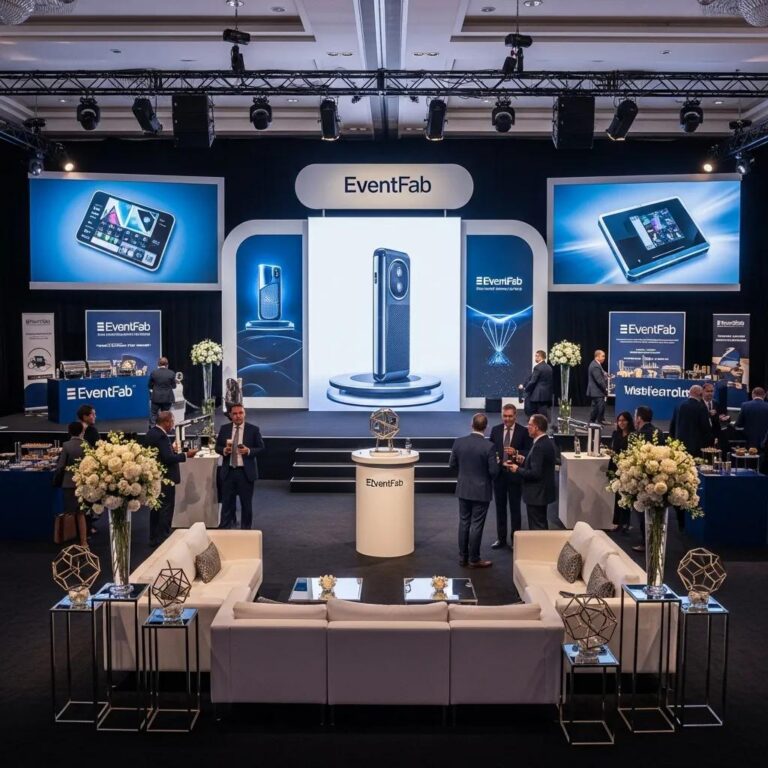
  • Press conference / panel: Same modular stage decking re-laid into a low riser; bar sections become a press table; banquette becomes audience seating.

That’s four programmed environments out of one rental order. Every one of those scenes is on the same freight ticket, the same install crew, and the same insurance certificate.

What Production Realities to Plan For

Modular doesn’t mean magic. There are real production constraints brand teams need to plan around, and the ones that bite are almost always the same:

  • Lead time. Stock modular SKUs from our New York warehouse ship in 2-3 weeks for the NY/CT/MA/RI corridor. Custom-branded skins or non-stock finishes push that to 4-5 weeks. If you’re inside two weeks, expect stock-finish only.
  • Reset windows. A modular reconfiguration is 60-90 minutes with two stagehands for an average ballroom footprint. Build that window into the show schedule, not the contingency.
  • Floor protection. Modular sections move a lot — three times over a three-day show. Insist on glides, casters, or floor pads on any piece that will be repositioned more than once.
  • Branding turnover. If the brand asks for a fresh skin on day two, those skins need to ship with the original order — not flown in at the last minute. Build them into the initial fab spec.
  • Venue load-in rules. NYC venues with freight elevators have specific cart sizes. Boston Seaport and Newport waterfront venues frequently restrict overnight outside storage. Confirm both in advance.

Most of these are easy to plan for. They only become problems when modular is bolted on at the end of the budget conversation instead of designed in from the beginning.

When Modular Isn't the Right Call

Modular furniture is a tool, not a religion. There are three scenarios where renting fixed or fully custom pieces still wins:

  1. Single-night galas. If the floor plan never changes, you don’t need the reconfigurability premium. A custom or curated fixed layout often looks more polished.
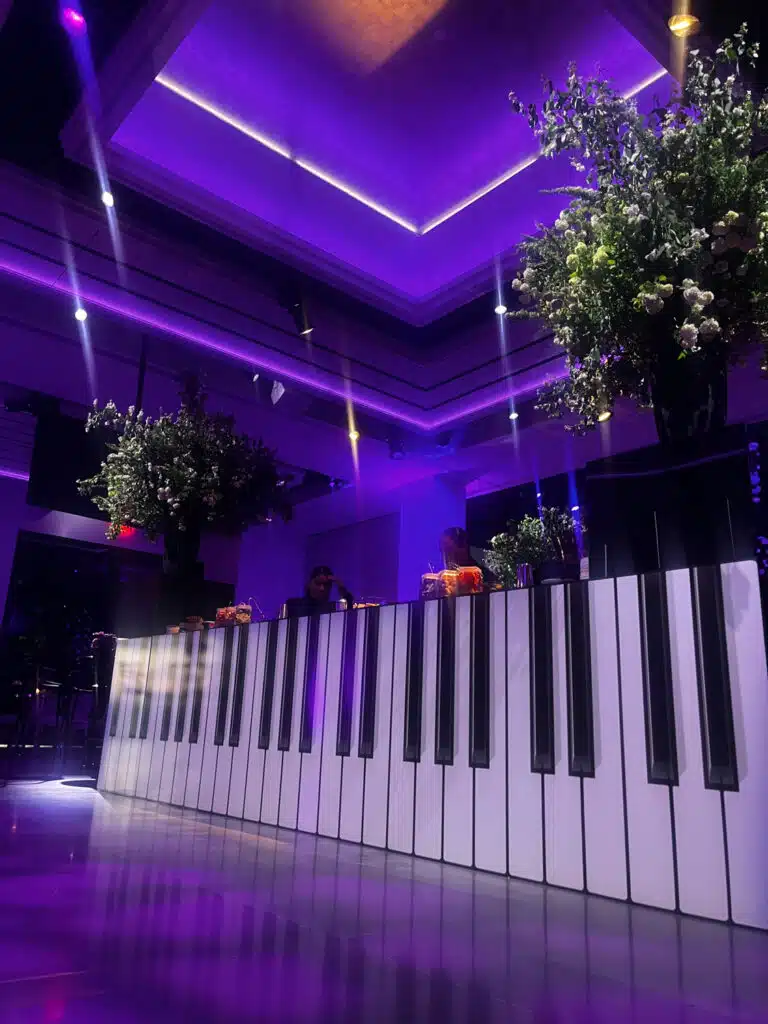
  2. Hero photo moments. The bar in the cover photo, the step-and-repeat, the centerpiece installation — these are usually custom fabricated because they need to read as one statement piece, not as a system.
  3. Permanent installations. Retail flagships and brand homes that need a 12-month lifespan should be custom-built. Modular’s magic is in turnover speed, which a permanent install doesn’t need.

The smart approach on most multi-day activations is a hybrid: one or two custom hero pieces for photography, and a modular system handling everything behind and around them.

The Region-Specific Read: NYC, CT, MA, RI

The Northeast event corridor has quirks that make modular even more valuable than in less venue-dense markets. NYC freight in particular punishes every avoidable truck — you’ll typically pay between $400 and $1,200 per round trip just to thread Manhattan, before union loaders. One modular order vs. three sequential rentals means one COI, one loading dock window, and one set of building elevator restrictions to coordinate.

Connecticut and Western Mass corporate campuses (Stamford, Hartford, Cambridge) usually have tighter loading windows but more flexible overnight storage — modular plays well there because you can stage the second-day config inside the venue. Rhode Island and Newport waterfront events are the opposite: easy access, tight overnight rules. Modular helps because resets happen during the show day, not overnight.

If you’re scoping a multi-day program in any of these markets, our regional event rentals team can spec a modular kit against your floor plan and freight access before you lock the venue contract.

The cheapest reset is the one you didn't need a second truck for. Modular furniture is, at its core, a freight strategy disguised as design.

Event Fab Team

Serving NY, CT, MA & RI

EventFab maintains a modular event furniture inventory out of our New York warehouse and services brand activations, corporate programs, weddings, and trade shows across Manhattan, Brooklyn, Long Island, Westchester, Stamford, Hartford, Cambridge, Boston, Providence, and Newport. Stock SKUs ship in 2-3 weeks; custom-branded skins in 4-5. We handle freight, install, day-of resets, and strike — so the modular ROI lands on your budget, not your stage manager's to-do list.

Build a Modular Plan for Your Next Multi-Day Activation

Bring us your run-of-show and venue plan. We'll spec a modular furniture kit that covers every programmed moment — and quote the freight, install, and reset labor on one line, not three.
Request a Quote

Modular Event Furniture — Frequently Asked Questions

The questions brand and agency producers ask us most often when they're scoping a multi-day program around modular furniture.
Contact Us

Tell Us About Your Project Or Event
