Event Fabrication

Custom Fabrication for Experiential Marketing: A Brand's Playbook

June 17, 2026 By Event Fab Team 9 min read

Every experiential campaign eventually hits the same fork in the road: do you rent the pieces you need, or do you fabricate something custom? It feels like a budget question. It’s really a question about what the brand moment has to do, how long it has to last, and what happens to the build the day after the doors close.

This is the playbook brand and agency teams ask us for: a clear way to decide when custom event fabrication earns its cost, when a rental is the smarter call, and how to think about a build across its full lifecycle instead of a single activation. Get the framing right and you stop overspending on one-off props and underinvesting in the structures that actually carry the brand.
Key Takeaways

  • Fabricate when the build is brand-specific, load-bearing to the experience, or scheduled to tour; rent when it's generic, short-lived, and replaceable.
  • Custom fabrication lead times typically run 6-10 weeks; complex multi-market builds need 10-14. Lock scope early or the timeline breaks first.
  • Think in lifecycle, not line items: a build amortized across three to five activations often beats repeated premium rentals on total cost.
  • Modular, flat-pack design is what makes a custom build reusable across NYC, Boston, and Providence without rebuilding from scratch.
  • The cheapest path is usually a hybrid: fabricate the hero brand elements, rent the commodity infrastructure around them.

Rent vs. Fabricate: The Decision That Sets Your Budget

Start with a blunt test. If you can buy or rent the item off a catalog and it would look right in any brand’s activation, rent it. Pipe and drape, standard lounge furniture, basic staging, power distribution, generic tenting — these are commodities. Paying to fabricate them custom rarely returns the investment.

Fabricate when the answer to any of these is yes:

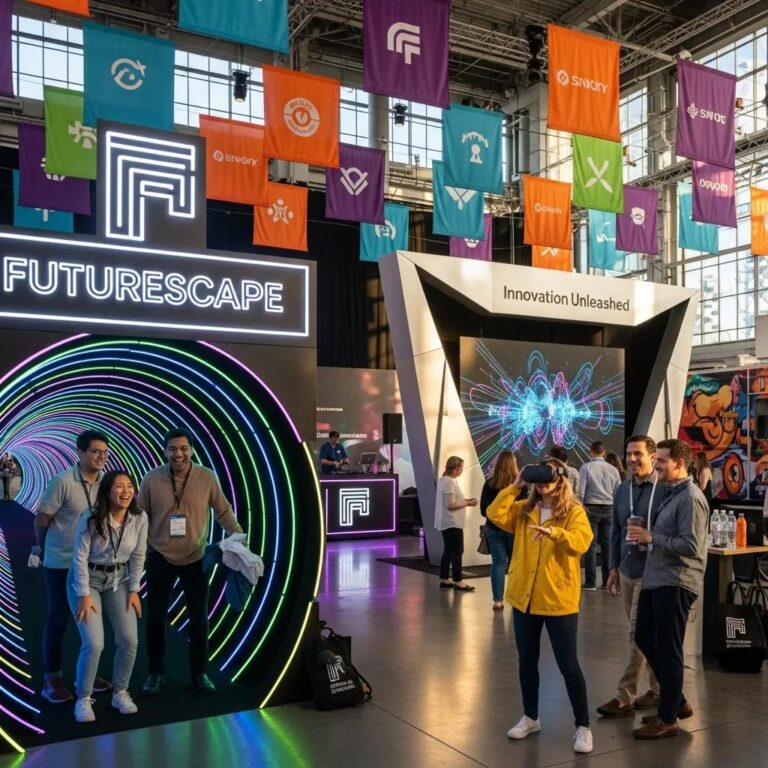
  • Is it brand-specific? A sculptural product replica, a logo-driven archway, a proprietary interaction — nothing off a rental floor will read as yours.
  • Does the experience depend on it? If the build is the moment guests photograph and remember, it has to be made to spec, not approximated.
  • Will it travel or repeat? A structure you’ll deploy three or more times is a capital asset, not an expense — and should be engineered as one.

Most campaigns land in the middle, and that’s the point. The teams who control cost best fabricate the few hero elements that carry the brand and rent everything around them. For the full picture of what fabrication actually covers, our complete guide to event fabrication breaks down the disciplines involved, from design to install.

Lifecycle Thinking: Stop Pricing the First Use

The most expensive mistake in experiential budgeting is pricing a build against one activation. A custom modular bar might cost more upfront than renting a premium bar for a single night. Run the same activation five times across a summer tour and the math inverts — the fabricated asset is paid off by event two and free by event five, minus refurbishment.

Lifecycle thinking changes three decisions:

  • Materials. A one-night build can use lighter, cheaper materials. A touring build needs road cases, reinforced joints, and finishes that survive repeated load-in and load-out.
  • Construction. Permanent assembly is faster to build but dies after one use. Modular, bolt-together, flat-pack construction costs more in engineering and pays it back every time you redeploy.
  • Storage. A reusable asset needs somewhere to live between activations. Factor warehousing into the lifecycle, not just the build.

When a brand tells us a concept is a one-off, we build for one use and keep the cost honest. When it’s a platform — a recurring sponsorship, a multi-city tour, a seasonal return — we engineer it to come apart, ship flat, and go back up clean. That’s the difference between a prop and a reusable experiential brand build.

Designing for Reuse: Modularity Is the Whole Game

A custom build only earns its lifecycle if it can move. The brands that get repeat value out of fabrication design for it from the first sketch, not as an afterthought once the structure is already welded together.

What modular design looks like in practice:

  • Panelized walls that break into shippable sections instead of one monolithic face.
  • Interchangeable graphics so the same chassis re-skins for a new campaign or a new sponsor without rebuilding the structure underneath.
  • Standardized connections — common hardware, labeled parts, numbered assembly — so a local crew in Boston can raise the same build a New York crew struck a week earlier.
  • Scalable footprints that flex from a 10×10 trade-show island to a full festival footprint using the same kit of parts.

This is also where fabrication and activation strategy meet. A modular build is the physical backbone of a campaign that has to show up consistently across markets, which is why we scope fabrication alongside our brand activation services rather than treating the structure and the experience as separate jobs.

Lead Times and What Actually Breaks the Timeline

Custom fabrication runs on a real clock, and the clock is unforgiving. Plan for these windows:

  • Single custom build, regional: 6-10 weeks from approved design to install-ready.
  • Multi-market or touring build: 10-14 weeks, because road-ready engineering, road cases, and duplicate components add fabrication time.
  • Permit-dependent installs (street activations, park footprints, tented structures over a certain size): add the municipal review window on top — often 3-6 weeks in dense markets, and longer in summer when city calendars fill.

What actually breaks the timeline is rarely the build itself. It’s late design sign-off, mid-project scope changes, and graphics approvals that lag the structure. Every week a design floats unapproved is a week subtracted from fabrication, and the install date doesn’t move. Lock the creative, freeze the footprint, and approve materials early — then the shop can hold the schedule.

The other quiet timeline killer is splitting vendors. When fabrication, production, and install sit with separate companies, every handoff is a place for the schedule to slip. Keeping them under one accountable team removes the gaps where weeks disappear.

The Hybrid Playbook: Fabricate the Hero, Rent the Rest

Here’s how an experienced brand team actually budgets a major activation. They divide the build into two columns.

Fabricate the elements that are unmistakably the brand: the product replica guests pose with, the branded portal they walk through, the custom interaction that only works because it was engineered for this campaign, the signature bar or demo station shaped like nothing on a rental floor.

Rent the infrastructure that’s invisible to the story: standard staging and decking, commodity lounge seating, basic tenting, power and climate control, general AV. None of it earns a custom build, and renting it frees budget for the pieces that do.

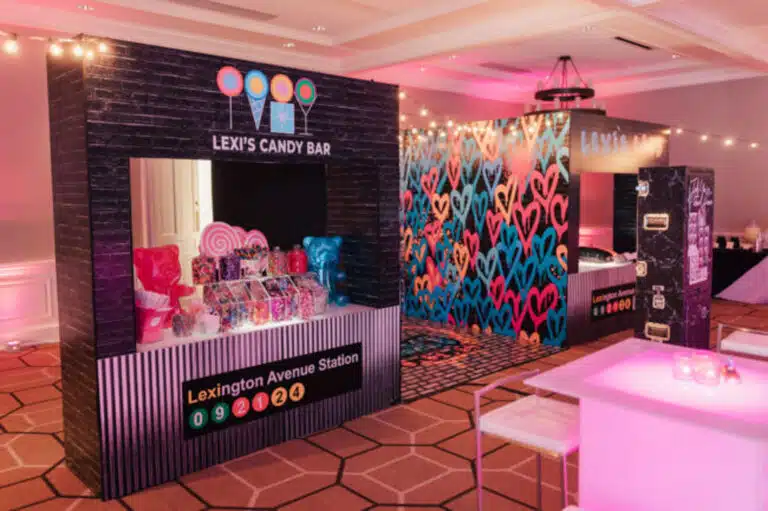
A worked example: a summer beverage activation touring three Northeast markets. The hero is a sculptural branded bar and an oversized product moment — both fabricated as a flat-pack modular kit engineered for the full tour. Around it, every market rents its own tenting, seating, and power locally, so nothing generic ships up and down I-95. The brand pays once for what’s theirs and rents what’s replaceable. That’s the playbook, and it’s the same logic whether the activation is one night in Manhattan or a six-stop run across four states.

Rent what's replaceable. Fabricate what's unmistakably yours — and engineer it to come back.

Event Fab Team

Serving NY, CT, MA & RI

We fabricate experiential builds out of our shop in the New York metro and deploy them across Connecticut, Massachusetts, and Rhode Island. Because we design for modular transport, the same hero build can headline an activation in Manhattan one weekend and Boston or Providence the next — without rebuilding from scratch or shipping commodity infrastructure across state lines.

Planning an Experiential Build?

Tell us what the brand moment has to do and how many times it has to do it. We'll tell you what to fabricate, what to rent, and how to engineer it for the full lifecycle — scoped end-to-end under one accountable team.
Request a Quote

Experiential Marketing Fabrication — Frequently Asked Questions

The questions brand and agency teams ask us most when they're deciding whether to fabricate a custom experiential build.

Contact Us

Tell Us About Your Project Or Event
