Industry Insights

What Does Event Production Cost? A Pricing Breakdown for Brands

May 20, 2026 By Event Fab Team 10 min read

The first question almost every brand or agency team asks us is also the hardest one to answer in a sentence: what does event production cost? The honest reply is that a 150-person product launch in a SoHo loft and a 2,000-person conference in a Boston convention hall can both be called “an event,” and they live in completely different budget universes. The number on the quote is driven by scope, venue, and lead time far more than by any per-head rule of thumb.

This breakdown gives you realistic ranges by event type, shows where the money actually goes line by line, and flags the hidden costs that quietly wreck budgets in the Northeast. By the end you will be able to read a production quote like someone who has built hundreds of them, and spot whether a number is high, low, or simply incomplete.

Key Takeaways

  • Event production budgets in the Northeast typically run from roughly $15K for a tight internal event to $500K and up for large galas and multi-day conferences — scope, not guest count, sets the band.
  • On a typical build, AV and staging eat 25–35% of the budget, custom fabrication and scenic 15–25%, and labor another 15–25% — the creative line is usually smaller than people expect.
  • The costs that blow budgets are rarely the design — they are union labor, overtime, power and generators, drayage, and last-minute scope changes inside the load-in window.
  • Lead time is a budget lever: 8–12 weeks lets you fabricate efficiently and lock vendor pricing, while a three-week rush can add 20–40% in expedite and overtime charges.
  • A real quote is line-itemed and all-in. If a number looks low, check what is missing — labor, power, permits, and contingency are the usual gaps.

Why “How Much Does Event Production Cost?” Has No Single Answer

Pricing an event is not like pricing a product. There is no shelf tag, because no two builds share the same scope, venue, or timeline. A clean, all-white press preview and a fully fabricated brand world with custom scenic, LED, and a working bar might host the same number of guests and differ by a factor of ten in cost.

Three variables move the number more than anything else:

  • Scope. How much is custom-built versus rented off the shelf. A logo printed on a standard backdrop is inexpensive; a two-story fabricated facade with integrated lighting is not.
  • Venue. A raw warehouse with no power, no rigging points, and a freight elevator the size of a phone booth quietly adds cost to every other line. A turnkey ballroom with in-house AV removes some of it.
  • Lead time. The calendar is a price. Eight to twelve weeks lets a shop batch fabrication and lock vendor rates. Three weeks means expedite fees, overtime, and premium freight.

It also helps to know what you are actually buying. Production and planning are not the same line on a budget — if that distinction is fuzzy, our explainer on the difference between event production and event planning is worth five minutes before you read a single quote. Production is the physical build, the AV, the crew, and the logistics. Planning is the strategy, vendor coordination, and run-of-show. Many quotes blur the two, and that is where confusion about cost starts.

Realistic Budget Ranges by Event Type

These are working ranges we see across New York, Connecticut, Massachusetts, and Rhode Island in 2026. Treat them as the band a production scope tends to land in, not a quote — a single high-spec element can push any of these well past the top end.

  • Internal or small corporate event (under 150 guests): roughly $15K–$50K. Think a team offsite, an all-hands, or a modest client reception with rented furniture, basic AV, and light branding.
  • Mid-size corporate event (200–500 guests): roughly $50K–$150K. Staging, real sound and lighting design, custom signage, lounge builds, and a crew that covers load-in through strike.
  • Brand activation / experiential footprint: roughly $25K–$250K+, depending entirely on how much is fabricated. A pop-up touchpoint sits at the low end; a fabricated brand environment with custom scenic, interactive moments, and a multi-day run sits at the top.
  • Product launch: roughly $75K–$300K. These skew high because the brand is on stage — reveal moments, broadcast-quality AV, and finish-level scenic are non-negotiable.
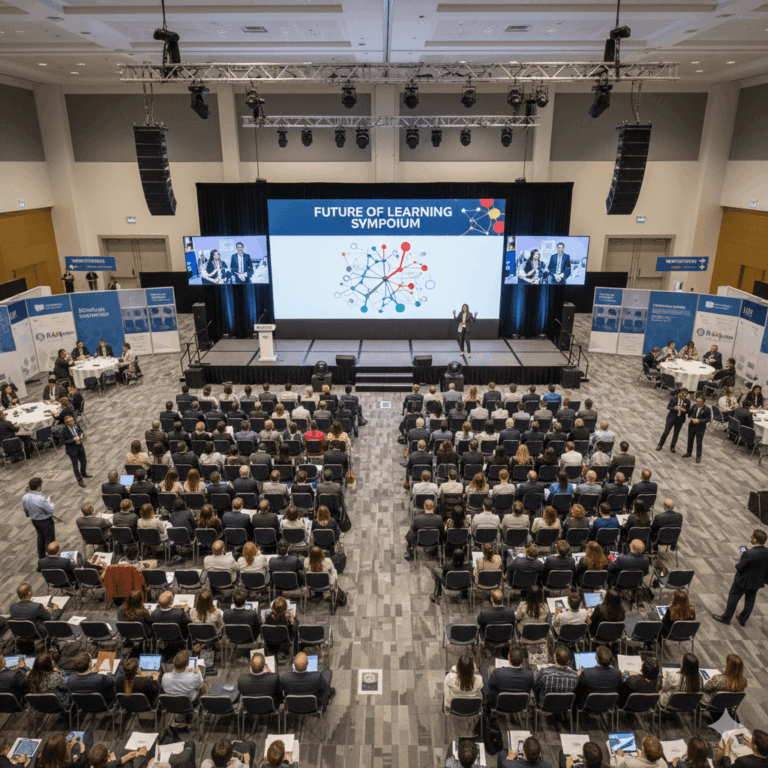
  • Gala or large conference: roughly $150K–$500K+. Multi-room AV, large-format video, rigging, scenic, and the labor to install and strike it all on a tight venue clock.
  • Custom trade show booth (fabrication only): roughly $20K–$100K+ for the build, before drayage, electrical, and on-site labor the show floor charges separately.

Corporate work is the most common request we scope, and the spread inside that single category is enormous — our corporate event production page walks through what actually changes the number as you move from a 100-person reception to a 600-person annual summit. The pattern holds everywhere: guest count sets the room, but scope sets the budget.

Where the Money Actually Goes: A Line-Item Breakdown

Open up a healthy production budget and the proportions are remarkably consistent, whatever the headline number. Here is roughly how a typical mid-to-large build divides:

  • AV, staging, and video (25–35%): sound, lighting, projection or LED, staging, and the control gear behind it. On launches and conferences this is the single biggest line.
  • Custom fabrication and scenic (15–25%): the built environment — walls, facades, bars, backdrops, signage, and any structure carrying your brand. This is where finish quality lives.
  • Furniture and rentals (10–15%): lounge furniture, tables, seating, linens, and the soft goods that make a raw space feel finished.
  • Labor (15–25%): install crew, strike crew, stagehands, and on-site management. In union venues this line is larger and far less flexible — more on that below.
  • Venue-related (5–10%): power distribution and generators, rigging, permits, and anything the building charges to make the event physically possible.
  • Design, creative, and project management (8–12%): renderings, CAD, run-of-show, and the producer keeping the timeline honest. This line is usually smaller than clients expect.
  • Contingency (around 10%): the reserve for the things no one can see on paper. Skipping it does not save money — it just moves the surprise to event week.

A quick reality check: if a quote shows almost nothing for labor or contingency, the cost has not disappeared. It is simply going to reappear later, usually at a worse exchange rate.

The Hidden Costs That Wreck Budgets

The line items that sink budgets are almost never the creative. They are the operational realities that do not show up in a mood board:

  • Union and venue labor. Many Manhattan venues, the Javits Center, and major convention halls in Boston and Providence require union crews with minimum call times and strict jurisdiction over who touches what. A job that takes your crew four hours can be billed very differently under house labor rules.
  • Overtime and load-in windows. When a venue only releases the room at 6 a.m. for a noon doors, every hour is premium. Tight windows are the most common overtime driver we see.
  • Power and generators. Raw spaces, rooftops, and outdoor sites in all four states often lack the power a full AV and lighting package needs. Generators, distribution, and a licensed electrician are real money.
  • Drayage and freight. On a trade show floor, moving your booth from the loading dock to your space — drayage — is billed by weight and can rival the cost of the booth itself.
  • Permits and inspections. Tents, rigging, pyrotechnics, and street closures all carry permit windows and fees that vary city by city.
  • Last-minute scope changes. The most expensive moment in any budget is a change made after fabrication starts. Re-cutting a built wall costs far more than deciding on it in week two.

These costs are also where geography matters. Loading into a fifth-floor SoHo space, a Hartford hotel ballroom, a Cape Cod tent, and a Providence mill building are four different logistical and labor problems. Our overview of event production across NYC, CT, MA, and RI covers how venue and regional rules reshape a budget the moment you change zip codes.

How to Get the Most Out of Your Production Budget

Spending well is not the same as spending less. The teams that get the most visible event per dollar tend to do the same handful of things:

  • Give the build real lead time. Eight to twelve weeks lets fabrication run efficiently and vendor pricing get locked. A three-week rush can add 20–40% in expedite freight and overtime for the exact same scope.
  • Invest where the camera and the guest are. Put budget into the stage, the entrance, and the few touchpoints people actually photograph. Spend less on the corners no one sees.
  • Build modular and reusable. Scenic and structures designed to be reconfigured pay for themselves across a tour or a season of events instead of hitting the dumpster after one night.
  • Lock scope before fabrication. Decisions are cheap on paper and expensive in the shop. A firm scope at the rendering stage is the single biggest cost saver available.
  • Use one accountable team. When fabrication, AV, rentals, and on-site management sit under one roof, you remove the markups, coordination gaps, and finger-pointing that come with stitching five vendors together.

What a Real Quote Should Include

A trustworthy production quote is line-itemed and all-in. You should be able to see, at minimum:

  1. Fabrication and scenic, itemized by element.
  2. AV, staging, and video, with the gear package spelled out.
  3. Furniture and rentals.
  4. Labor for install, strike, and on-site management — including any union or venue-mandated rates.
  5. Power, rigging, permits, and freight or drayage.
  6. Design and project management.
  7. A clearly stated contingency.

When a number looks suspiciously low, the right question is not “why is this cheap?” — it is “what is missing?” Nine times out of ten the gap is labor, power, or contingency, and the difference resurfaces as a change order during event week. An all-in quote that looks higher up front is often the one that actually holds. The fastest way to turn these ranges into a real number for your event is to request a quote and let us scope it against your actual venue, date, and goals.

Guest count tells you how big the room is. Scope, venue, and lead time tell you what the event costs — and only one of those three is fixed.

Event Fab Team

Serving NY, CT, MA & RI

We scope and produce events across New York, Connecticut, Massachusetts, and Rhode Island, and we price every project against its real venue and regional labor rules — because a Manhattan union ballroom and a Rhode Island mill building carry very different cost structures. Fabrication, AV, rentals, and on-site management run under one accountable team, which keeps the budget honest from rendering to strike.

Want a Real Number for Your Event?

Tell us your event type, venue, date, and guest count, and we'll scope the production end-to-end with a line-itemed, all-in quote — no guessing from per-head rules of thumb.
Request a Quote

Event Production Cost — Frequently Asked Questions

The questions brand and agency teams ask us most often once they start building a real production budget.
Contact Us

Tell Us About Your Project Or Event