Industry Insights

Why Companies Are Investing More in Experiential Events in 2026

August 22, 2026 By Event Fab Team 9 min read

Ask a brand marketer where their 2026 budget moved and you will hear a version of the same answer: out of paid digital, into rooms where people can actually touch something. The shift is not sentimental. Rising CPMs, cookie deprecation, and audiences that scroll past almost everything have made the case for physical experience on pure math — a well-built activation earns dwell time that no fifteen-second pre-roll can buy.

This is a look at what is actually driving experiential event spending in 2026, where the money is going inside a budget, and what production realities decide whether that spend returns anything. If you are building a case internally, the numbers and lead times below are the ones your finance partner will ask about.
Key Takeaways

  • Experiential line items are growing because digital attention costs more per impression every year, not because in-person is trendy again.
  • Fabrication and build typically consume 35-50% of an experiential budget — plan it first, not last.
  • Custom builds need 6-10 weeks of lead time; NYC street or park permits often need 30-45 days on top of that.
  • Reusable modular structures spread cost across a full tour and change the per-event math dramatically.
  • Measurement has matured: dwell time, qualified conversations, and content capture volume now travel back to the CFO.

The budget shift is a cost-of-attention story

For most of the last decade, the default answer to a reach problem was more paid media. That reflex has weakened. Platform CPMs have climbed steadily, signal loss from privacy changes made targeting blunter, and the creative half-life of a social asset is now measured in days. Marketers are not abandoning digital — they are rebalancing toward channels where attention is not rented by the second.

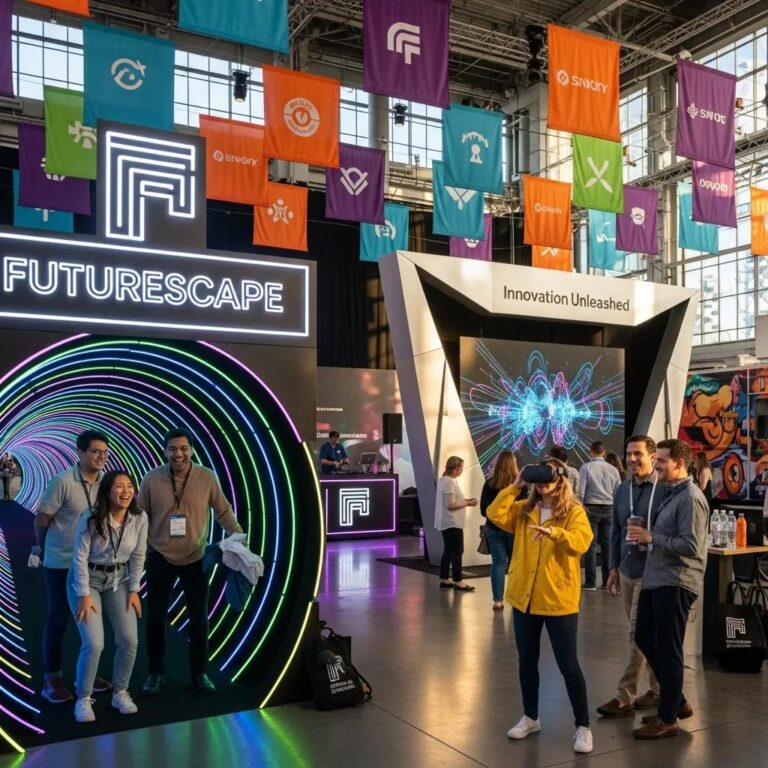
An experiential brand activation flips the arithmetic. Instead of paying to interrupt someone for a few seconds, you build an environment people choose to enter and stay in. Average dwell at a well-designed footprint runs several minutes, not seconds. Those minutes come with conversation, product in hand, and — critically — content the audience creates and distributes themselves.

That last part is where the 2026 spending logic gets sharp. A physical build is no longer just a live-audience play. It is a content studio that produces weeks of owned and earned assets. Finance teams that once saw a one-day cost now see a production investment amortized across a quarter of channel output.

Where the money actually goes inside an experiential budget

Teams that have never run a large activation tend to underestimate one line and overestimate another. Here is a realistic split for a mid-size brand footprint in the Northeast:

  • Fabrication and build: 35-50%. Structures, millwork, custom bars, scenic, finishes, and the crew hours to assemble them. This is the single largest line on nearly every activation and the one most often costed last.
  • Technical production: 15-25%. Lighting, LED, audio, power distribution, content playback. Scales fast when you add screens or exterior lighting.
  • Venue, permits, and site costs: 10-20%. Highly variable. A private loft in Brooklyn and a permitted street footprint in Manhattan are not remotely the same number.
  • Logistics, labor, and load-in: 10-15%. Trucking, union labor where required, storage between dates, install and strike windows.
  • Staffing and program: 5-15%. Brand ambassadors, talent, demos, giveaways.

The pattern worth internalizing: the physical build dominates. When a budget gets cut late, the instinct is to trim fabrication because it feels like scenery. It is not scenery. It is the reason anyone stopped walking. Our experiential brand builds practice exists because that line deserves engineering attention from day one, not a value-engineering pass in week eight.

Lead time is the constraint nobody budgets for

Money is rarely what kills an activation. The calendar is. Realistic windows for the Northeast market:

  • Custom fabrication: 6-10 weeks from approved drawings to load-in. Complex structures, specialty finishes, or engineered rigging push toward the top of that range.
  • Design and approvals: 2-4 weeks before fabrication can even start. Brand review cycles are the usual culprit.
  • NYC street activity or park permits: 30-45 days, sometimes longer for high-traffic locations, and they run in parallel with fabrication, not after it.
  • Venue holds in Q4: Book six months out in New York and Boston. October through mid-December is effectively sold out by late summer.

What compression actually costs

A four-week build request is not impossible, but it is expensive. Rush fabrication, overtime shop hours, expedited material sourcing, and a compressed install window can add 20-40% to the build line. Worse, it removes the buffer that absorbs the inevitable — a finish that arrives wrong, a venue that changes its rigging rules two weeks out. Teams that lock scope early do not just save money; they buy the ability to fix problems quietly.

Modular and reusable builds changed the ROI conversation

The most consequential shift in how brands spend is not how much — it is how many times a build gets used. A single-use structure charges the entire fabrication cost against one date. A modular system designed for repeated install and strike spreads that cost across a tour.

Run the math on a five-market activation. A custom build that only survives one install means five separate fabrication runs. A properly engineered modular footprint means one build, five installs, plus trucking and storage between dates. Per-event cost typically drops by half or more by market three, and the brand gets consistency across every stop — same finishes, same sightlines, same photo.

Designing for reuse changes what happens in the shop. Panel connections, crate design, hardware counts, and finish durability all have to be specified for repeated handling. It is a different engineering brief than a one-night build, and it needs to be stated before drawings are approved. This is a core part of how we scope brand activation services for clients running multi-market programs.

Measurement grew up, and that unlocked the budget

Experiential spending used to stall at the CFO because the reporting was soft — footfall counts and a photo gallery. That has changed. The metrics that now travel back through a marketing organization are specific:

  • Dwell time per visitor, captured through entry and exit scanning or beacon counting.
  • Qualified conversations logged by staff against a defined script, not raw headcount.
  • Content volume — user-generated posts, tagged impressions, and the owned assets captured on site for downstream paid and organic use.
  • Lead and sample-to-purchase conversion where a commerce path exists.
  • Cost per engaged minute, which is the number that most clearly beats a digital comparison when the build is good.

None of this is exotic instrumentation. It requires deciding what you are measuring before the footprint is designed, because the physical layout determines what is measurable. An entry funnel that counts cleanly, a demo station that logs interactions, a photo moment positioned where the brand mark is unavoidable in frame — those are design decisions with reporting consequences.

What the Northeast market specifically demands

Regional realities shape the budget more than most national teams expect. A few that come up on nearly every project:

  • New York City: Street activity permits, MPTF requirements for filmed content, loading dock windows measured in hours, and venues with strict rigging point limits. Load-in in Manhattan is a scheduling exercise as much as a labor one.
  • Boston and Cambridge: Tight historic-district footprints, seasonal weather risk from November through March, and heavy Q2 and Q4 competition for the same handful of large venues.
  • Connecticut and Westchester: Corporate campus activations with their own security and vendor onboarding requirements — add two weeks for credentialing alone.
  • Rhode Island and the coast: Strong summer window, real wind loading concerns for outdoor structures, and ferry or bridge logistics that affect truck routing.

Working with a partner who already holds the shop, the trucks, and the crew relationships in these markets removes a layer of coordination risk. That is the model behind our event production across NYC, CT, MA, and RI — one team carrying design through fabrication through install, instead of a chain of vendors each protecting their own scope.

When a budget gets cut late, the instinct is to trim fabrication because it looks like scenery. It isn't scenery — it's the reason anyone stopped walking.

Event Fab Team

Serving NY, CT, MA & RI

Our shop and crews work across New York City and the boroughs, Westchester and Long Island, Connecticut's corporate corridor, Greater Boston, and coastal Rhode Island. That footprint means one team handles design, fabrication, trucking, and install without handing your project between vendors at every state line. It also means we already know the permit windows, dock rules, and venue restrictions that turn a clean plan into a scramble.

Building an experiential budget for 2026?

Send us the concept, the markets, and the date. We will come back with a realistic build scope, an honest lead time, and a cost range you can take into a budget conversation — before you commit to a venue.
Request a Quote

Experiential Event Spending in 2026 — Frequently Asked Questions

The questions brand and agency teams ask most often when they are building or defending an experiential line item.

Most single-market brand footprints land somewhere between $50,000 and $250,000 all-in, depending on build complexity, technical production, and venue. Custom fabrication alone typically runs 35-50% of that. Multi-market tours change the math significantly because a reusable build amortizes across every stop — see the modular section above.

Work backward: 6-10 weeks for custom fabrication, plus 2-4 weeks for design and brand approvals before that. If the activation involves a NYC street or park permit, add a 30-45 day permit window running in parallel. For a Q4 date in New York or Boston, venue holds should be secured six months out.

It depends entirely on what you measure. On raw reach, digital wins and always will. On cost per engaged minute, qualified conversation, and content produced per dollar, a well-built activation regularly outperforms. The honest answer is that they do different jobs — the 2026 shift is teams recognizing that a channel built purely for reach was being asked to do a job it was never good at.

Only if it was designed to be reused. Reusability is an engineering decision made before drawings are approved — panel connections, crate design, hardware counts, and finish durability all change. Tell your fabricator up front how many installs the structure needs to survive. Retrofitting a one-night build for touring is usually more expensive than building it right the first time.

Three places, consistently. Scope creep after fabrication has started, which triggers rush charges. Underestimated labor and load-in, especially in union venues or buildings with restricted dock windows. And venue-imposed requirements discovered late — rigging limits, power upgrades, required in-house vendors. A pre-production site walk catches most of this.

In practice it works best when brand owns the creative intent and events owns the production budget, with one named decision-maker for approvals. The failure mode we see most is split approval authority: design changes get approved by one team while the budget sits with another, and the fabrication clock burns while they reconcile.

Contact Us

Tell Us About Your Project Or Event

Which of our services are you interested in?*
Preferred Contact Method*