Event Fabrication

Branded Environments: How to Make Your Event Feel Like Your Brand

July 2, 2026 By Event Fab Team 9 min read

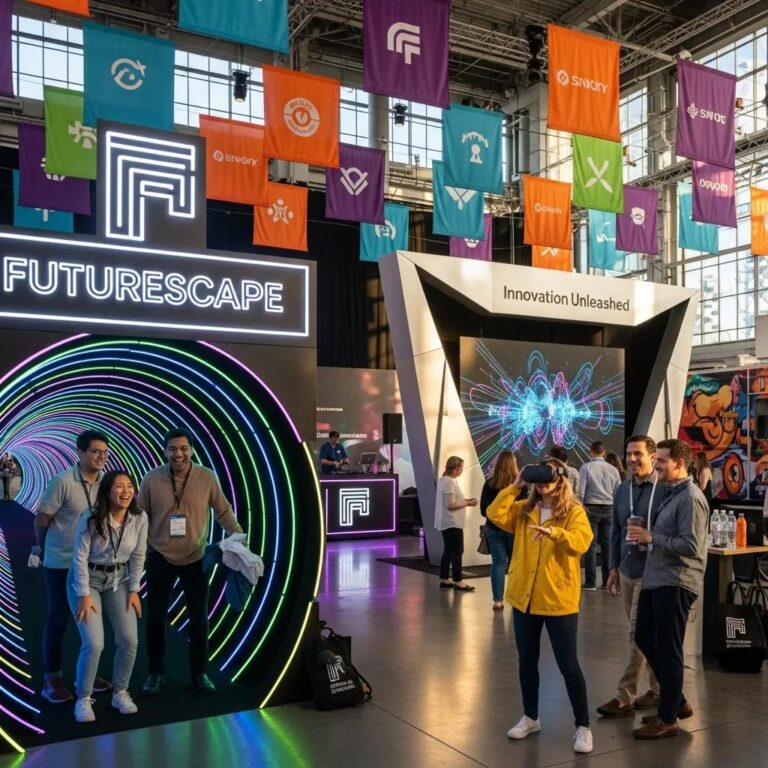
A branded environment is the moment your event stops looking like a rented ballroom and starts feeling like your company walked into the room. It is the difference between a logo taped to a podium and a space where every surface, sightline, and sound cue tells guests exactly whose world they are standing in. When it works, people cannot point to any single element that did it — the whole space just reads as you.

Getting there is a production discipline, not a decorating exercise. It takes early decisions about materials, sightlines, and lead time, and a signage system that stays consistent from the sidewalk to the last photo booth. This guide walks through how brand teams in the Northeast build environments that hold up under real foot traffic, real timelines, and real budgets.
Key Takeaways

  • A branded environment layers architecture, color, texture, light, and sound so the space reads as your brand before anyone sees a logo.
  • Lock your material and fabrication decisions 6 to 8 weeks out — custom scenic and printed structures need lead time that decor rentals do not.
  • Signage discipline means one type system, one color spec, and one hierarchy applied from the entrance to the smallest wayfinding sign.
  • Design for sightlines and photo moments first; guests experience the room as a sequence of framed views, not a floor plan.
  • Sensory layering — scent, sound, and lighting temperature — is what makes an environment feel intentional rather than merely decorated.

What A Branded Environment Actually Is

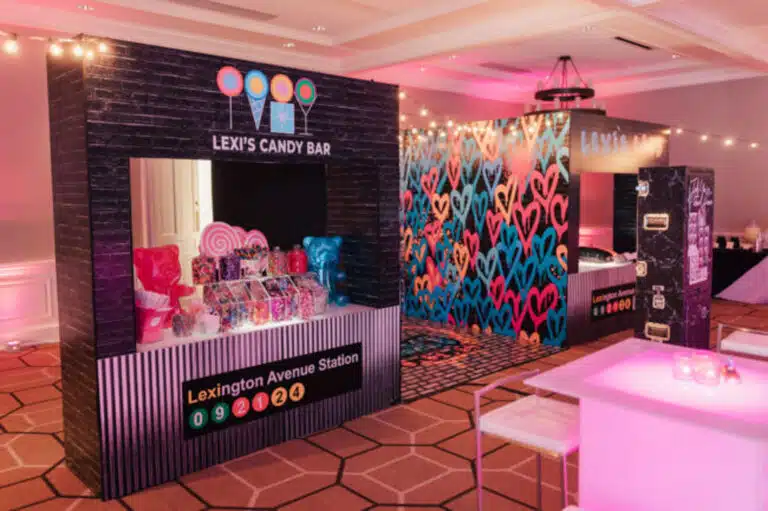
A branded environment is a physical space engineered so that its architecture, materials, color, light, and sound all express a single brand identity. It goes further than dressing a venue. Decor adds objects to a room; a branded environment changes how the room itself feels to move through.

The distinction matters on the production side because the two are built differently. Decor is sourced and placed. An environment is designed, fabricated, and installed — often with custom scenic walls, printed structures, and rigged lighting that have to be engineered to load in and out of a specific space. If you want the full picture of how these builds come together, our guide on what event fabrication is breaks down the process from concept drawings to strike.

The clearest test: walk a guest to the center of the room, remove every logo, and ask whether they could still name the brand. In a true branded environment, the color story, the material palette, and the spatial rhythm answer that question on their own.

The Five Layers Of Immersion

Immersion is not one big idea — it is five layers stacked deliberately. Skip one and guests feel the gap even if they cannot name it.

  • Architecture and spatial flow. How guests enter, where they are funneled, and what they see at each turn. This is the skeleton everything else hangs on.
  • Color and material. Your brand palette rendered in real surfaces — matte versus gloss, raw wood versus powder-coated steel. Materials carry brand meaning that a printed color chip never will.
  • Light. Color temperature, intensity, and direction set the emotional register before anyone reads a word.
  • Sound. A curated audio bed, even at low volume, tells the nervous system what kind of space this is.
  • Scent and touch. The layers guests never mention but always remember.

Our experiential brand builds team designs these layers together rather than in sequence, because a lighting choice changes which materials read correctly, and a material choice changes what the sound needs to do.

Sensory Layering Without Overload

The failure mode of ambitious environments is too much at once — a scent, a soundtrack, moving lights, and video walls all competing. The room reads as busy, not branded. Layering well means giving each sense a job and a volume.

Set a dominant and a supporting sense

Pick one sense to lead. For a product launch, that is usually light and the hero display. For a hospitality lounge, it is often scent and texture. Everything else supports at a lower intensity.

Keep transitions deliberate

Guests should feel a change as they move from the entrance to the main space to a breakout — a shift in light temperature or sound density that signals a new chapter. Abrupt jumps feel like a different event; no change at all feels flat.

This kind of sensory choreography is a core part of our brand activation services, where the goal is a space guests move through rather than simply stand in.

Signage Discipline: One System, Everywhere

Nothing undoes an environment faster than inconsistent signage. When the entrance banner, the wayfinding arrows, and the restroom signs use three different fonts and two shades of your brand color, guests read it as improvised even if the scenic build is flawless.

Signage discipline means committing to one system and enforcing it end to end:

  • One type hierarchy. Define headline, subhead, and label styles once, and use them for everything from the hero wall to a printed table number.
  • One color spec. Specify exact values — Pantone for print, hex for screens — and hand them to every vendor. Do not let a printer approximate.
  • Consistent substrate and finish. Matte signage next to glossy signage reads as two brands. Pick a finish family and hold it.
  • Wayfinding as brand voice. Even a directional arrow can carry your tone. Generic signage is a missed impression.

The teams that get this right build a small signage bible during pre-production and share it with every fabricator and print vendor, so the sign at the loading dock matches the one on stage.

Design For Sightlines And Photo Moments

Guests do not experience a floor plan. They experience a sequence of framed views — what they see when they walk in, what is behind the person they are talking to, what ends up in the photo they post. Designing for those views is what separates an environment that looks good in a render from one that looks good in a crowd.

Practical moves that hold up under real foot traffic:

  • Design the entry view first. The first three seconds set expectations. Put your strongest branded surface where every guest sees it on arrival.
  • Plan the hero photo moment. Decide where guests will take pictures and make sure the brand is unavoidable in frame — without turning it into an obvious step-and-repeat if the event calls for something more integrated.
  • Protect key sightlines from clutter. Cases, cabling, and crew paths have a way of creeping into hero views. Mark them off in the plan and defend them during load-in.

Our full event fabrication services include the scenic engineering behind these moments — the walls, structures, and finishes that have to look seamless on camera and survive a full day of contact.

Lead Time And Budget Realities

The most common reason a branded environment underdelivers is a compressed timeline. Custom fabrication is not a rental you confirm two weeks out — it is a build with a critical path.

Realistic windows for Northeast projects:

  • 8 to 12 weeks for a fully custom environment with scenic walls, printed structures, and integrated lighting. Design, engineering, fabrication, and a mock-up all live inside that window.
  • 4 to 6 weeks for a semi-custom build that combines modular structures with branded printed elements.
  • 2 to 3 weeks is realistic only for lighter branded overlays on existing furniture and rental inventory.

On budget, expect custom scenic and printed structures to carry the largest line, followed by lighting and rigging, then install labor. Venue rules — union load-in requirements at many Manhattan spaces, elevator and freight constraints in Boston high-rises — can move labor costs meaningfully, so factor them early rather than at the eleventh hour.

Remove every logo from the room. If guests still know whose event they are standing in, you built an environment. If they don't, you decorated one.

Event Fab Team

Serving NY, CT, MA & RI

We build branded environments across the Northeast — from Manhattan and Brooklyn showrooms to corporate campuses in Connecticut, launch spaces around Boston, and waterfront venues in Rhode Island. Each market comes with its own load-in rules, union requirements, and venue constraints, and we plan for them before the first panel is fabricated so install day stays on schedule.

Ready To Build A Space That Feels Like Your Brand?

Tell us about your event, your venue, and your timeline, and we'll map out an environment that reads as unmistakably yours — with lead times and budget bands laid out up front.
Request a Quote

Branded Environment Design — Frequently Asked Questions

The questions brand and agency teams ask most often when they start planning a branded environment.
Contact Us

Tell Us About Your Project Or Event
