Event Fabrication

What Event Fabrication Looks Like Behind the Scenes

July 3, 2026 By Event Fab Team 9 min read

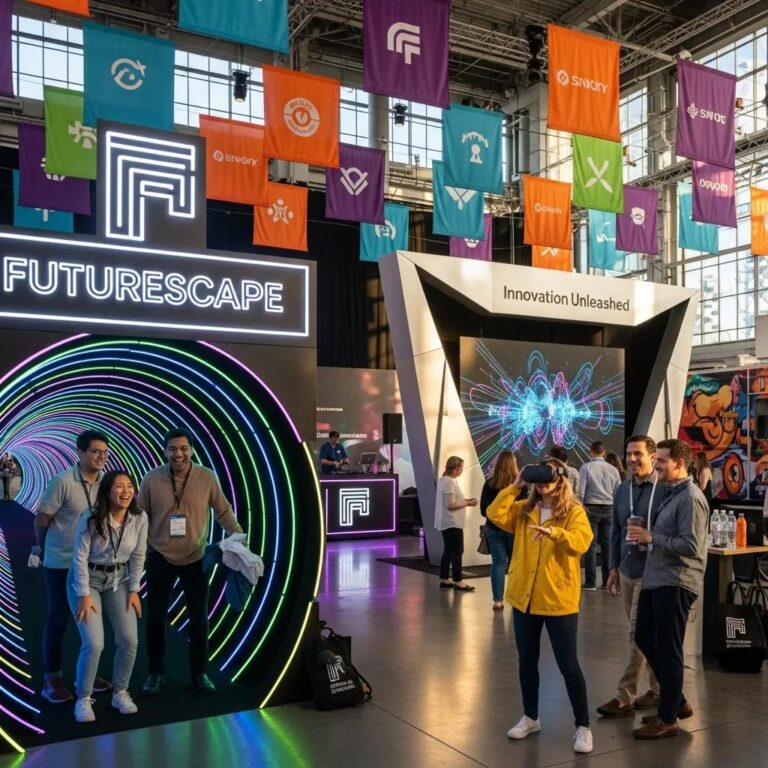
Most people meet an event build on show day, when the entrance already glows and the lounge already looks like it grew there. What they miss is the six weeks before, when that same structure lived as a foam mockup, a cut list, and a stack of decisions about load, finish, and freight. The polish is the last five percent. The rest happens on a shop floor.

This is a look at that floor: how a concept becomes CAD, becomes a prototype, becomes crates on a truck to a Manhattan loading dock. If you brief fabrication vendors or budget builds for brand and agency teams, knowing what actually happens between approval and install is the difference between a timeline that holds and one that quietly slips.
Key Takeaways

  • A custom build typically needs four to eight weeks from approved design to install — most of that is fabrication and finishing, not shipping.
  • Prototyping catches the expensive problems early: a $200 foam mockup prevents a $12,000 rebuild the week of the show.
  • Material choice is driven as much by weight, fire code, and reusability as by looks — plywood, aluminum extrusion, and acrylic each earn their place.
  • Venue realities — freight elevators, load-in windows, floor loading limits — shape the build before a single panel is cut.
  • The best fabrication partners lock scope early and treat change orders as timeline events, not just cost line items.

From concept to cut list: where a build actually starts

A fabrication project rarely starts with sawdust. It starts with a drawing package. The creative team hands over a rendering or a mood direction, and the shop’s job is to translate that intent into something buildable — dimensioned, structural, and priced. That translation is the single most underrated step in the whole process, because a rendering doesn’t have to obey gravity and a real structure does.

During this phase a fabricator is answering unglamorous questions: How does this stand up? What holds the weight of the LED wall bolted to its face? Can it be built in sections that fit through a standard double door? The output is a cut list and a set of shop drawings — the blueprint everyone on the floor works from. If you want the full grounding on what this discipline covers, our guide to what event fabrication is walks through the categories and terms you’ll hear in these early conversations.

This is also where scope gets locked. A good shop pushes to finalize dimensions and finishes before cutting begins, because every change after this point ripples through material orders, labor scheduling, and freight.

The prototype: cheap failures before expensive ones

Prototyping is where confident designs meet reality. Before a shop commits real material and real labor, it builds a proof — sometimes a full foam-core mockup, sometimes a single joint or a corner detail, sometimes a 3D-printed part to check fit and tolerance. The point is to fail cheaply.

Consider the math. A foam mockup and a few hours of labor might cost a few hundred dollars. Discovering the same flaw — a bracket that won’t clear the frame, a radius that reads wrong at scale — during final assembly the week of the show can force a rebuild that runs into five figures and blows the install window. Prototyping is insurance you buy on purpose.

Digital fabrication has made this loop faster and tighter. Complex brackets, signage letters, and custom connectors that once took days to machine now come off a printer overnight. Our 3D printing and fabrication work leans on this heavily for prototyping and for one-off parts that would be wasteful to tool for traditionally.

  • Fit checks: does the part seat, clear, and align before we commit to a full run?
  • Finish tests: how does a paint, laminate, or vinyl read under event lighting versus shop fluorescents?
  • Load proofs: will the structure carry monitors, product, or people leaning on it without deflection?

Materials: why the shop picks what it picks

On the floor, material choice is a negotiation between how something looks, how much it weighs, whether it passes fire code, and whether it can be reused. Beauty is only one variable.

Plywood and MDF do the structural heavy lifting for walls, platforms, and casework — cheap, workable, and paintable. Aluminum extrusion shows up wherever weight matters or where a piece needs to break down and travel repeatedly. Acrylic and polycarbonate handle backlit surfaces and clean edges. Steel appears where spans get long or loads get serious. Each material carries a lead time and a freight weight, and both feed straight back into the schedule.

Fire rating is not optional. Most NYC venues and convention spaces require flame-certified materials and documentation, and a build that can’t produce a certificate can be pulled at load-in. Reusability matters too — a modular, well-finished piece that survives multiple activations is a better spend than a beautiful build that dies in a dumpster after one night. That thinking runs through all of our event fabrication services, where the goal is durability that earns its cost across shows.

Furniture and finishing: the last five percent people actually touch

Structure gets you a set piece. Finishing gets you an environment. This is the stage where seams get filled, edges get sanded, paint gets sprayed in booth-controlled conditions, and laminate or vinyl goes down clean. It is slow, detail-obsessed work, and it is what separates a build that photographs like a brand flagship from one that reads like a trade-show flat.

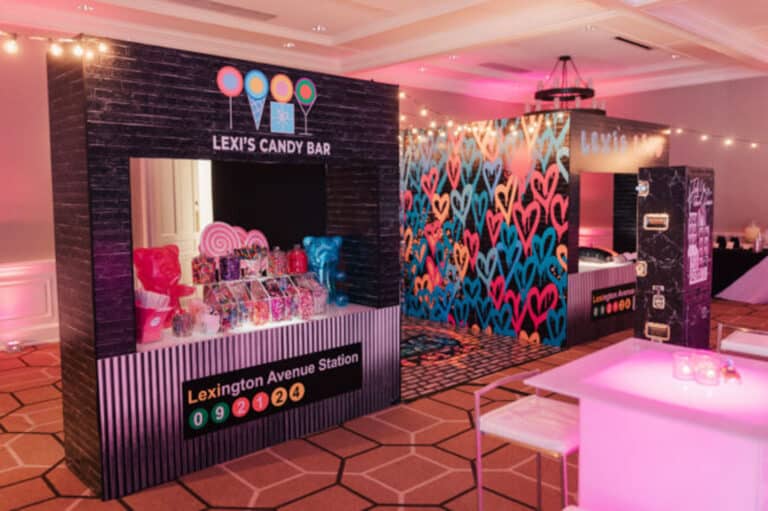
Furniture is its own workstream. Custom seating, bars, plinths, and reception desks have to be comfortable and structural at the same time — a bar top has to take elbows and spilled drinks for eight hours and still look sharp in the recap video. Our custom event furniture gets built and finished to the same tolerance as the hero structures, because guests judge an activation by what they lean on, not just what they walk past.

Finishing is also the phase most likely to absorb schedule pressure, since it sits at the end. Protecting it — resisting the urge to let earlier delays eat the finishing window — is one of the quiet disciplines that keeps quality intact when a timeline gets tight.

Timelines and logistics: the venue shapes the build

Here is the part that surprises first-time buyers: the venue constrains the build before design is even final. A freight elevator’s dimensions decide the maximum size of any single section. A loading dock’s height and a union load-in window decide how the crates get staged and how many hands you need. Floor loading limits at a rooftop or a landmark space can rule out steel entirely.

A realistic timeline for a meaningful custom build looks something like this:

  1. Weeks 1-2: design translation, shop drawings, material orders, scope lock.
  2. Weeks 2-4: prototyping, cutting, structural assembly.
  3. Weeks 4-6: finishing, graphics application, test build in the shop.
  4. Show week: crating, freight, on-site install, and strike planning.

Rush is possible, but rush costs come from overtime labor and expedited materials, not magic — the physics of drying paint and curing adhesive don’t accelerate. In the New York metro, add traffic, permit windows, and tight dock schedules, and the case for building in buffer becomes obvious. A shop that does a full test build before it ships is a shop that has already found the problems you’d otherwise discover on the venue floor at 6 a.m.

The show-day polish is the last five percent. Everything that makes it hold up happens weeks earlier, on the shop floor.

Event Fab Team

Serving NY, CT, MA & RI

Our shop builds for the realities of the Northeast — Manhattan freight elevators and union load-in windows, Connecticut and Massachusetts corporate campuses, and Rhode Island waterfront venues. We plan fabrication around each venue's docks, permits, and access from the first drawing, so what leaves the floor fits the room it's headed to.

Have a build in mind? Let's pressure-test the timeline.

Share your concept, your date, and your venue, and we'll walk you through what's buildable, what it weighs, and how the schedule really shakes out — before anything gets cut.
Request a Quote

Event Fabrication Behind the Scenes — Frequently Asked Questions

The questions brand and agency teams ask most once they see how a custom build actually comes together.
Contact Us

Tell Us About Your Project Or Event
