Event Fabrication

The Anatomy of a Show-Stopping Brand Activation Booth

June 27, 2026 By Event Fab Team 9 min read

A brand activation booth lives or dies in the first three seconds. Someone walking a crowded show floor at the Javits Center decides almost instantly whether to slow down, step in, or keep moving toward the next thing competing for their attention. Everything you build has to earn that pause.

The booths that consistently win that moment are not the most expensive ones. They are the ones engineered deliberately: a clear visual hierarchy that reads from forty feet, an interaction layer that gives people something to actually do, and a footprint designed to hold attention long enough to register the brand. Here is how those pieces fit together, and where production realities tend to break the plan.

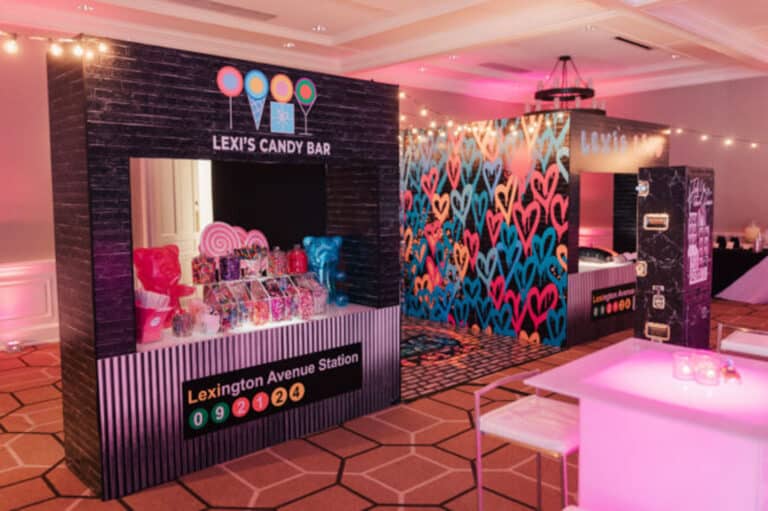
One booth anchor that reliably draws a line: a branded claw machine rental stocked with your merch — play-to-win mechanics built right into the footprint.
Key Takeaways

  • A booth needs a single hero element legible from 30-40 feet, not five competing focal points.
  • Dwell time, not impressions, is the metric that predicts qualified conversations on the floor.
  • The interaction layer should give visitors a reason to stay 90 seconds or longer.
  • Custom fabrication lead times run 6-10 weeks; rush builds compress quality, not the calendar.
  • Floor plan, rigging rules, and load-in windows shape the design before the first render.

Visual Hierarchy: What Reads From Forty Feet

Most booths fail because they try to say everything at once. Logo, tagline, product shots, QR codes, and three messaging pillars all compete on the same wall, and the result reads as noise from across the aisle. The fix is ruthless prioritization. Decide what one thing a passerby should absorb at distance, then build the structure to deliver it.

A working hierarchy has three tiers:

  • The hero element — a single large-format graphic, a tall structural form, or a lit feature that announces the brand from 30-40 feet. This is what stops the walk.
  • The orientation layer — the message someone reads at 10-15 feet that tells them why they should care and what they will find inside.
  • The detail layer — product, demos, and proof points that only matter once a person has crossed into the footprint.

Scale and lighting do the heavy lifting in the top tier. A 12-foot structural moment with clean sightlines beats a wall crammed with copy every time. This is where thoughtful custom trade show booth fabrication separates a brand from the pipe-and-drape crowd renting the same modular kit as everyone else in the hall.

The Interaction Layer: Give People Something to Do

A beautiful booth that people only look at is a billboard. The booths that generate conversations give visitors a reason to engage with their hands, their phones, or each other. That interaction layer is what turns foot traffic into dwell time, and dwell time into qualified leads.

The interaction does not need to be a screen. Some of the strongest activations use the simplest mechanics:

  • A hands-on product demo staged so visitors operate it themselves
  • A build-your-own or customization moment that produces a takeaway
  • A photo or video moment designed to be shared, not just snapped
  • A guided sensory experience — taste, sound, texture — tied to the brand story

The goal is participation, not spectacle. When the mechanic is anchored to the brand rather than bolted on for novelty, it does double duty: it holds attention and it teaches. That is the line between a gimmick and a true brand activation. If you are still mapping the difference between a passive display and a real activation, our primer on what a brand activation actually is breaks down the formats and where each one fits.

Dwell-Time Engineering: Designing the Footprint to Hold People

Dwell time is the metric that matters, and it is something you design for, not something you hope for. A footprint that pulls people in and then nudges them deeper produces longer conversations and more booth-staff touches per hour. A footprint that traps the entrance or hides the payoff loses people in seconds.

A few principles consistently extend dwell:

  • Open the corner, not the wall. Inviting visitors in from the aisle corner rather than a flat frontage widens the entry and reduces the psychological barrier to stepping in.
  • Sequence the experience. Lead with the hero moment, then reveal the demo or content deeper in the footprint so there is a reason to keep moving.
  • Plan for clustering. Build in counters, ledges, and seating that let small groups gather without blocking the flow behind them.
  • Light the path. Brightness gradients pull the eye and the feet toward the part of the booth you most want people to reach.

For brands running a multi-stop experience or a narrative build, this is where an experiential brand build earns its budget — the structure itself choreographs how people move, where they pause, and what they remember on the walk back to the aisle.

Production Realities: Lead Times, Rigging, and Load-In

The most elegant render means nothing if it cannot be built, shipped, and installed inside the venue’s rules and the show’s schedule. The constraints that shape a booth are set long before the design is finalized, and ignoring them is what actually breaks the timeline.

Plan around these from day one:

  • Fabrication lead time. A genuinely custom build runs roughly 6-10 weeks from approved design to crate, depending on materials, finishes, and integrated tech. Rush jobs do not shorten the work — they compress quality control and inflate cost.
  • Rigging and height limits. Hanging signage, ceiling height caps, and rigging-point approvals vary by venue and are often non-negotiable. Confirm them before you commit to an overhead hero element.
  • Load-in and load-out windows. Big-room shows assign tight dock and freight schedules. A booth that cannot be assembled inside the window is a booth that does not open on time.
  • Fire, electrical, and union labor rules. Material flame ratings, power drops, and who is allowed to touch what on the floor all carry cost and lead-time implications.

None of this is a reason to dial back ambition. It is a reason to bring the fabricator into the conversation early, while the design is still flexible enough to absorb the constraints instead of fighting them.

Putting It Together: A Booth That Works as a System

The strongest activation booths are not a stack of features. They are a system where the hero element earns the pause, the interaction layer earns the dwell, the footprint earns the depth, and the build is engineered to survive load-in and look flawless under show lighting at hour eight.

When those four layers reinforce each other, the booth stops being a structure and starts being an experience people choose to spend time inside. That is the difference a team feels in the lead numbers after the show closes — more conversations, longer ones, and a brand that the floor actually remembers.

A booth's job is not to be seen. It is to be entered, used, and remembered — in that order.

Event Fab Team

Serving NY, CT, MA & RI

We fabricate and install brand activation booths for shows across the Northeast, from the Javits Center and Brooklyn's industry showcases to convention halls in Hartford, Boston, and Providence. Working regionally means we understand each venue's rigging rules, load-in logistics, and labor requirements before the truck rolls — so your booth opens on schedule and looks the way it did in the render.

Building an activation booth for an upcoming show?

Bring us in while the design is still flexible. We will pressure-test the concept against venue rules, fabrication lead times, and your dwell-time goals, then build something the floor cannot walk past.
Request a Quote

Brand Activation Booths — Frequently Asked Questions

The questions brand and agency teams ask most often when they start planning a custom activation booth for a trade show or experiential event.

Start the design conversation 10-14 weeks out for a fully custom build. Fabrication itself typically runs 6-10 weeks, and you want runway before that for concept, approvals, and resolving venue rigging and electrical constraints. The earlier a fabricator is involved, the more design ambition the timeline can actually support.

You can build a strong interaction into a 10×10, but 10×20 or 20×20 gives you room to separate the hero moment from the demo so people flow deeper rather than crowding the entrance. The footprint matters less than how you sequence it — a well-choreographed small booth out-performs a large one with no flow.

Track dwell time and booth-staff conversations per hour, not just badge scans. Impressions tell you people walked by; dwell time and qualified conversations tell you the design held attention long enough to matter. Set those targets before the build so the layout is engineered toward them.

Often, yes. We design modular structural systems and crating so a booth can be reconfigured for different footprints and venues across a season. Reuse changes the cost math considerably — it is worth flagging at the design stage so we build for it rather than retrofitting later.

Venue constraints discovered late — rigging-point denials, height caps, freight and load-in windows, and flame-rating requirements. None are hard to accommodate when known early, but each can force a redesign if surfaced after the build is underway. Confirm the venue’s exhibitor rules before the design is locked.

Contact Us

Tell Us About Your Project Or Event

Which of our services are you interested in?*
Preferred Contact Method*
