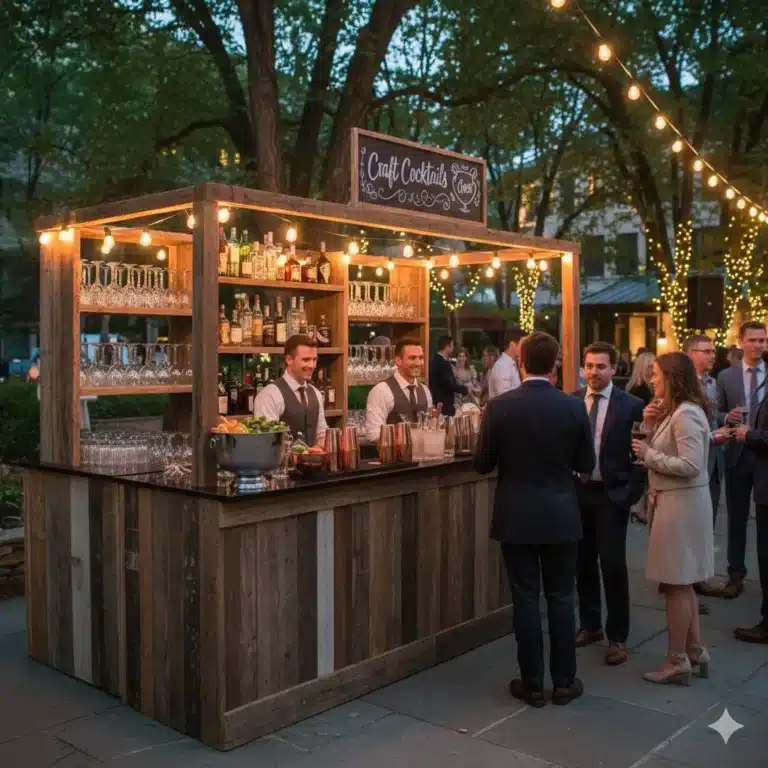
A beverage station that sells the brand is designed around three questions: what does the guest read while they wait, what does the bartender need to move fast, and what shows up in a vertical phone photo. Get those three right and the rest follows.
The front face is the billboard
The bar front — the panel guests stare at while queuing — is prime branded surface and the first thing we design. Options range from printed and laminated graphic panels to dimensional logos, backlit acrylic, fluted wood, brushed metal, or faux-stone laminates. Custom fabrication matters here: a purpose-built custom bar lets you set the exact height, footprint, and finish for the venue and the look, instead of bending the concept to fit a rental shell.
The back wall sells the photo
What sits behind the bartender ends up in every guest photo, so it carries as much brand weight as the front. A back bar with a lit logo, a bottle display, greenery, or a tight color story turns an incidental snapshot into on-brand content. Keep the palette disciplined — two or three colors read cleanly on camera; six turn to noise.
Sightlines and height
Standard bar height is about 42 inches, which hides bartender clutter and keeps logos at eye level. Watch the approach angles: if guests come from two directions, the branding has to resolve from both. For a circular or island bar, the logo wants to be visible 360 degrees, which changes the build entirely from a straight back-of-room bar.
- Durable for load-in: finishes get scuffed in transit — specify materials that survive a truck, not just a render.
- Modular where it helps: a bar that breaks into panels clears tight NYC freight elevators and narrow venue doors.
- Re-skinnable: a neutral base structure with swappable branded fronts lets one bar serve multiple sponsors or multiple event days.


 203-208-8909